Orthodontic treatment is about more than straightening teeth. Some patients present with multiple concerns that affect the bite, facial balance, and smile, requiring a carefully planned and individualized approach.
This case involved an adult patient with a skeletal Class III tendency (protruding lower jaw), an open bite tendency, severe dental crowding, and a missing upper lateral incisor. The primary goal was to improve function and smile aesthetics while avoiding jaw surgery.
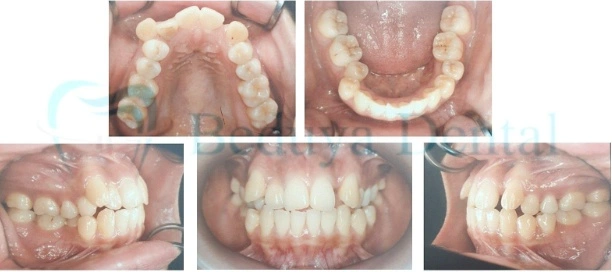
Several problems had to be addressed simultaneously. Severe crowding, an imbalanced bite, and a missing upper front tooth meant that every stage of treatment had to be carefully coordinated to achieve a stable, functional, and natural-looking result.
Instead of treating each problem separately, the treatment plan was designed to improve the bite, facial harmony, and smile as a whole.
Treatment
After a comprehensive diagnosis, a customized non-surgical orthodontic treatment plan was developed.
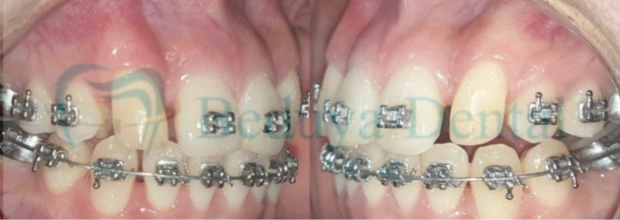
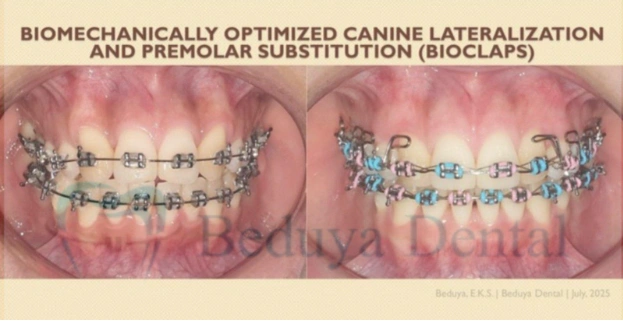
Carefully planned extractions relieved the severe crowding and created the space needed to correct the bite. Rather than replacing the missing upper lateral incisor with an implant or bridge, the neighboring canine was repositioned to serve as the lateral incisor, while the adjacent first premolar was modified to function as the canine. This approach restored the smile using the patient’s own natural teeth.
Treatment was completed over approximately 31 months, progressing from alignment and space management to bite correction, finishing, and long-term retention.
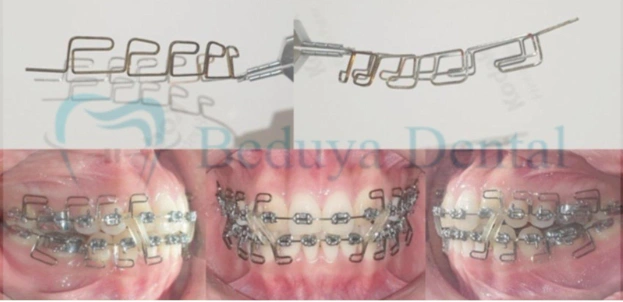
One of the distinguishing features of this case was the application of Biologically Optimized Canine Lateralization and Premolar Substitution Technique (BIOCLAPS).
Although canine substitution is a well-established treatment option for missing upper lateral incisors, BIOCLAPS expands the concept by considering not only the position of the teeth but also the biological adaptation of the surrounding bone and gingival tissues.
Rather than waiting until the finishing stage, controlled root movement was incorporated early during the Multiloop Edgewise Archwire (MEAW) phase of treatment. This encouraged gradual adaptation of the supporting tissues as the teeth were repositioned.
As treatment progressed, the canine developed softer gingival contours characteristic of a lateral incisor, while the first premolar developed stronger gingival architecture and root prominence characteristic of a canine. By guiding these biological adaptations throughout treatment rather than relying solely on cosmetic reshaping afterward, BIOCLAPS produced a more natural transition between the substituted teeth and enhanced both the functional and microesthetic outcome.
The Outcome
Treatment successfully relieved the severe crowding, corrected the bite, improved smile symmetry, and restored the missing upper lateral incisor using the patient’s own teeth.
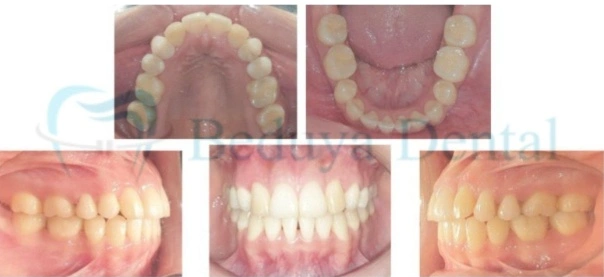
The patient achieved a balanced and functional occlusion with improved facial harmony and a natural-looking smile, all without the need for jaw surgery. The result demonstrates how comprehensive diagnosis, individualized treatment planning, and carefully controlled biomechanics can produce stable functional outcomes while preserving natural dental tissues.
Disclaimer:
Educational, evidence-informed case reports presented in a patient- and dentist-friendly format. These cases are shared for learning purposes and do not replace individualized professional consultation.
Patient Image & Data Consent Notice
All clinical photographs, radiographs, and records presented in this case report are published with the patient’s informed consent. Identifying information has been removed or minimized to protect patient privacy. These materials are shared solely for educational and professional purposes.