This case describes the interdisciplinary management of a 62-year-old woman who sought treatment because she was no longer satisfied with her existing upper and lower removable dentures. Beyond the poor fit of her prostheses, she was increasingly concerned about the appearance of her smile and felt that her teeth and dentures made her look older than her actual age.
Clinical examination revealed advanced dentoalveolar collapse (DAC) resulting from the loss of multiple posterior teeth, accompanied by periodontal bone loss, severe wear of the remaining dentition, and pathological migration of the lower anterior teeth. The absence of posterior teeth created a compromised anchorage condition, adding considerable complexity to orthodontic treatment. Existing crowns on the upper lateral incisors and years of removable denture use further increased the complexity of rehabilitation.
The patient’s medical history included well-controlled diabetes mellitus and hormone-induced osteoporosis, both of which required careful treatment planning because of their potential influence on periodontal health and bone remodeling during orthodontic tooth movement.
Rather than accepting the existing tooth positions or removing the remaining dentition to fabricate complete dentures, a TAD-assisted pre-prosthetic orthodontic approach was selected to reposition the remaining teeth before prosthetic rehabilitation. By providing reliable skeletal anchorage despite the absence of posterior teeth, temporary anchorage devices (TADs) made controlled tooth movement possible while preserving the patient’s remaining dentition. This facial-driven interdisciplinary strategy established a more favorable foundation for the final prostheses while improving facial support, oral function, and the patient’s overall appearance.
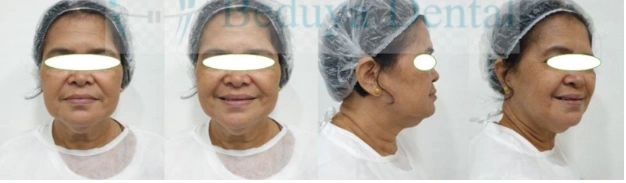
The patient presented primarily for the replacement of her existing upper and lower removable dentures, which had become increasingly uncomfortable and unsatisfactory over time. She also found it difficult to chew efficiently and was concerned that the appearance of her teeth and dentures made her look older than her actual age. Her goal was not only to receive new dentures but also to achieve a more natural-looking smile and a more youthful facial appearance.
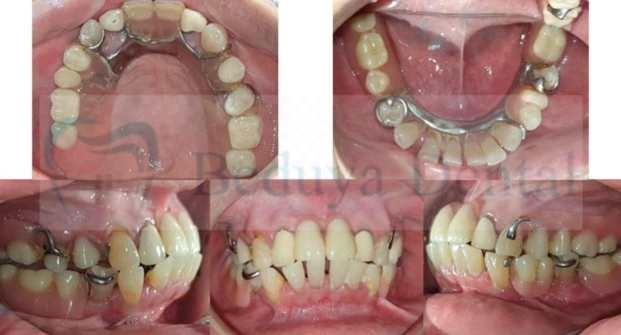
Comprehensive clinical and radiographic examination revealed dentoalveolar collapse associated with the loss of multiple posterior teeth in both arches. Chronic periodontal disease had resulted in significant alveolar bone loss, wear of the remaining dentition, and pathological migration of the lower anterior teeth, producing spacing and flaring. The lower incisors had become more prominent than the opposing upper teeth, further compromising both occlusion and facial aesthetics.
The absence of posterior teeth created a compromised anchorage condition that limited conventional orthodontic mechanics. Existing crowns on the maxillary lateral incisors, together with long-term removable prostheses, further complicated the restorative rehabilitation. These findings required careful coordination between orthodontic, periodontic and prosthodontic treatment to preserve the remaining dentition while establishing a more favorable foundation for definitive prosthetic reconstruction.
The treatment was planned to:
Considering the patient’s compromised periodontal support, systemic health, and absence of posterior anchorage, a TAD-assisted pre-prosthetic orthodontic approach was selected.
Temporary anchorage devices (TADs) were strategically placed to provide stable skeletal anchorage while minimizing the number of screws required. Customized orthodontic auxiliaries were designed to deliver controlled tooth movement that repositioned the migrated lower anterior teeth and corrected the occlusal discrepancies without placing excessive stress on the compromised periodontal tissues.
Throughout treatment, orthodontic mechanics were carefully adjusted to maintain light and biologically appropriate forces. This individualized approach respected the patient’s periodontal condition while facilitating predictable tooth movement and preparing the dentition for the restorative phase.
Following orthodontic treatment, definitive prosthetic rehabilitation was completed using a fixed anterior bridge combined with an esthetic clasp-free removable partial denture in the maxillary arch, while the mandibular arch received an esthetic clasp-free removable partial denture. The clasp-free design enhanced smile esthetics by eliminating the visible metal clasps commonly associated with conventional removable dentures.
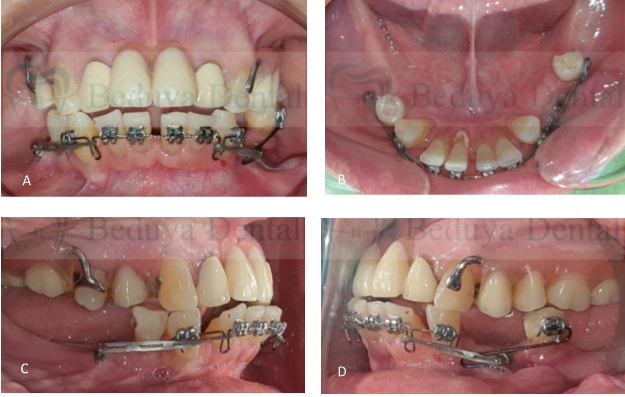
Progressive improvement was observed throughout treatment as the migrated lower anterior teeth were gradually repositioned and the occlusal relationship became more favorable for prosthetic rehabilitation. Sequential clinical photographs documented substantial improvement after five months, with continued correction evident at eight and thirteen months.
By the completion of orthodontic treatment, the remaining teeth had been repositioned into a more favorable alignment, allowing the prosthodontic phase to proceed under significantly improved conditions. The interdisciplinary sequencing simplified the fabrication of the definitive prostheses while preserving the patient’s remaining natural teeth.
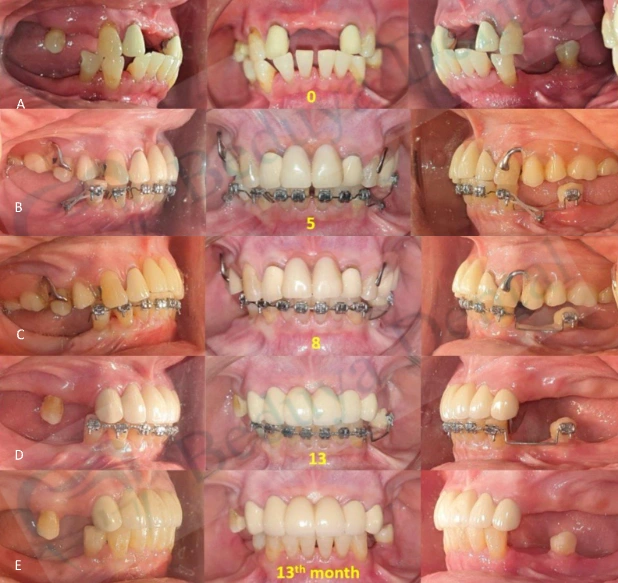
Following 13 months of interdisciplinary orthodontic treatment, the pathological migration of the lower anterior teeth was successfully corrected, improving their inclination and establishing a more favorable occlusal relationship for prosthetic rehabilitation. Preservation of the remaining dentition avoided the need for complete extraction while allowing the definitive prostheses to be constructed under more ideal conditions.
Beyond the dental correction, treatment restored facial support, produced a more harmonious smile, and created a younger and healthier facial appearance. The esthetic prostheses blended naturally with the patient’s remaining teeth, eliminating the conspicuous metal clasps present in her previous dentures and significantly improving her smile and overall quality of life.
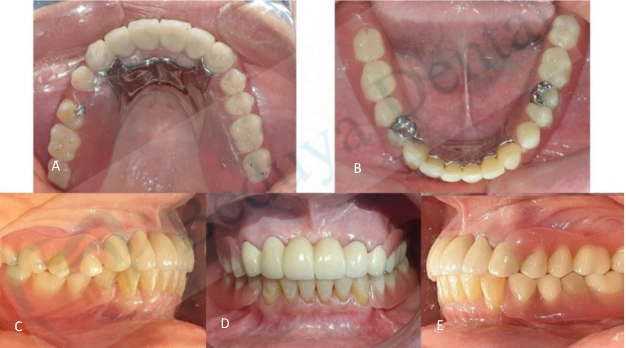
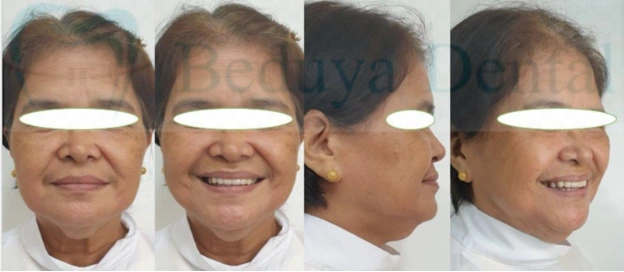
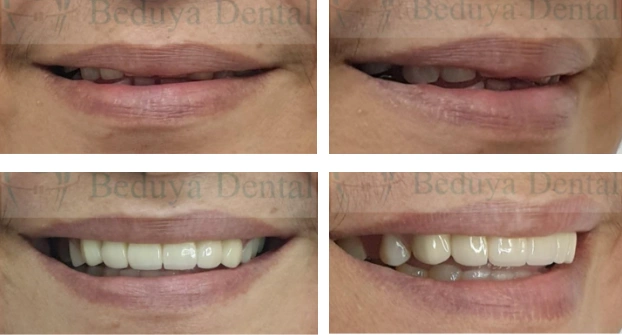
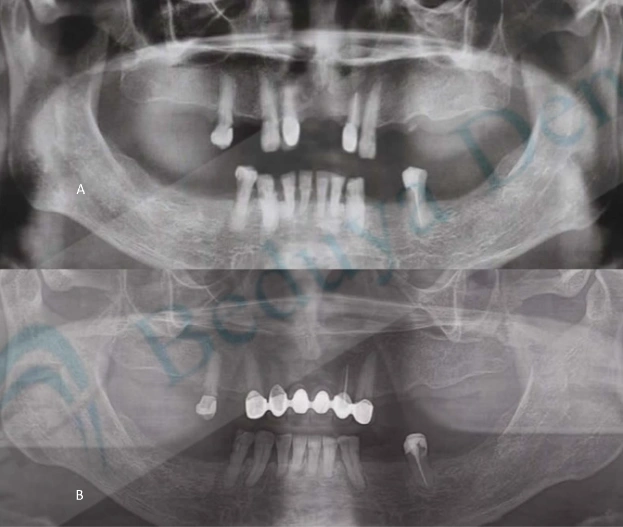
This case demonstrates that TAD-assisted pre-prosthetic orthodontics can provide a conservative and predictable solution for adults with dentoalveolar collapse, compromised anchorage, and reduced periodontal support. By strategically repositioning the remaining dentition before prosthetic rehabilitation, comprehensive treatment preserved natural teeth, simplified restorative procedures, and enhanced both function and facial appearance. Careful interdisciplinary planning made it possible to achieve outcomes that extended beyond occlusal correction, resulting in a more natural smile and improved overall facial harmony.
Adult orthodontic treatment is not limited to aligning teeth or correcting the bite. In carefully selected patients, repositioning the remaining dentition before prosthetic rehabilitation can preserve natural teeth, improve facial support, and create more favorable conditions for long-term restorative success.
This case reflects Dr. Beduya’s philosophy of Facial-Driven Orthodontics, where treatment planning extends beyond dental alignment to consider facial aesthetics, periodontal health, prosthetic rehabilitation, and the patient’s overall well-being. Rather than simply replacing missing teeth, the goal is to restore harmony between the teeth, smile, facial structures, and function through coordinated multidisciplinary care.
This clinical case has been presented at several scientific meetings in the Philippines as part of continuing professional education and interdisciplinary discussions on adult orthodontic rehabilitation, including:
Disclaimer:
Educational, evidence-informed case reports presented in a patient- and dentist-friendly format. These cases are shared for learning purposes and do not replace individualized professional consultation.
Patient Image & Data Consent Notice
All clinical photographs, radiographs, and records presented in this case report are published with the patient’s informed consent. Identifying information has been removed or minimized to protect patient privacy. These materials are shared solely for educational and professional purposes.